What is the African Manifesto

African Manifesto

The word African specifically relates to the indigenous people of the African continent and their descents in the Diaspora ( Caribbean , Americas , Arabia , etc). The race-nationality model such as that currently employed by African-American, African-Brazilian and African-Caribbean communities more accurately describes the identity whilst fully articulating the history and geopolitical reality.

The miscellaneous usage of the label 'Black' within this site reflects its contemporary use as a means to denote a specific

sociocultural and political context. It is recognized as a colloquial term that was fashioned as a reactionary concept to derogatory racial epithets in the 1960's. It is offensive when used as a racial classification code word to denote African people. Other such denigrating terminology when made in reference to African culture, heritage or identity are 'Tribe', 'Sub-Saharan Africa', or 'black Africa '.


Wednesday, September 28, 2016

White Supremacy In South Africa, And The African Girls Who Are Rejecting It

AFRICANGLOBE – There’s been an outpouring of support for the Black girls at Pretoria Girls High School, but there’s also been bafflement and more discrimination. It’s just a school policy to straighten their hair, some have argued, but it’s more than that: it is the protection of white standards at the expense of Black identity.School rules and codes of conduct exist to instill discipline, so that youngsters aren’t as boisterous as they’d hope to be. There’s the sound of the bell, the uniforms, and lines of students snaking their way to assembly. It’s all very structured, but what happens when those rules suppress a student’s identity?

Read More http://www.africanglobe.net/africa/white-supremacy-south-africa-african-girls-rejecting/


Wednesday, September 21, 2016

White Supremacy In South Africa, And The African Girls Who Are Rejecting It

AFRICAN GLOBE – There’s been an outpouring of support for the Black girls at Pretoria Girls High School, but there’s also been bafflement and more discrimination. It’s just a school policy to straighten their hair, some have argued, but it’s more than that: it is the protection of white standards at the expense of Black identity. School rules and codes of conduct exist to instill discipline, so that youngsters aren’t as boisterous as they’d hope to be. There’s the sound of the bell, the uniforms, and lines of students snaking their way to assembly. It’s all very structured, but what happens when those rules suppress a student’s identity?

Read More

Wednesday, September 14, 2016

Nigerian World Scrabble Champion Denied Visa By French Embassy

AFRICANGLOBE – The French embassy in Nigeria reportedly denied the reigning World Scrabble Champion Wellington Jighere a travel visa to the World Championship at the Grand Palais in Lille, France. On Friday, Jighere took to his Facebook page to announce that he — as well as the rest of Nigerian scrabble team — had been denied French visas even after they had fulfilled all necessary visa requirements.

Read More

Wednesday, September 7, 2016

Obama Destruction of Libya

Libya once was a proud nation that rejected US military presence on the continent, seeing it as an obstacle to Pan-African unity. With the country destroyed, the US has been able to further expand militarily all over the continent. And it has been President Obama, not George W. Bush, who has presided over the rapid Neo-colonization of Africa.


Read More

Wednesday, August 31, 2016

Only the overthrow of capitalism can bring liberation

This year the celebration of African Liberation Day of May 25 took place with the energy of the new Pan African force that emerged in all parts of the world that simply stated that, “Black Lives matter.” From Bahia in Brazil to Mogadishu in Somalia and Chibok in Nigeria to Chicago in the United States there are new forms of political organizing to register the need to protect Black life. These new forms of organizing have brought to the forefront new militants for liberation and emancipation and new sites of struggles. The old battles for liberation involved the struggles for state power and the new push for freedom requires not just state power but also the struggles for bread, freedom and social justice.  Some liberators of yesterday have become oppressors. Others pay lip service to the idea of African independence while stealing billions which should be put to work for the health and safety of the working peoples. In principle, most of the governments in the Pan-African world do not work to free the people from threats to life and livelihood. At the same time they remain silent with the rise of petty fascism as manifest in the emergence of Donald Trump in the United States and the forces of the National Front of France.

Read More 

Tuesday, August 23, 2016

A Strategy to Remedy African Instabiity

Only Africa has solutions to African problems. That requires a healing leadership. We need to mobilize the people to reform the current leadership mindset, which is only destructive. Africa needs to address issues of civic education, of citizens being able to elect leaders who will make a difference, and to ensure we have institutions that make it impossible for anybody to act as if there were no laws.

Diagnosis: Negative leadership

In the 1960s, most African countries snatched their independence from the colonialists, but often without a broad and unifying vision to reconcile the leadership with the emancipator aspirations of the people. In this context, without considering the specificity of the continent’s history, the victory of emancipation was short-lived or aborted. The new government systems in place could not satisfy the peoples’ aspiration for dignity, or gain the ability to pilot entire nations to achieve true liberty. Post-colonial Africa has gone through extreme odds. Since the 1960s, roughly 40 wars have resulted in 10 million deaths and created more than 10 million refugees.

Read More

Tuesday, July 26, 2016

Embrace Everything African

Agenda 2063 is our response as to what we as Africans need to do for us to achieve our dream of the Africa we want. The Agenda sets out the approach as to how the continent should effectively learn from the lessons of the past, build on the progress now underway and strategically exploit all possible opportunities available in the immediate and medium term, to ensure positive socioeconomic transformation within the next 50 years” said the Minister of Economic Planning, Hon Tom Alweendo, when he addressed a Ministerial Follow-up committee earlier this week in Windhoe. Read More

Marcus Garvey's Legacy

He had a background in printing and published his first newspaper, The Watchman, in 1909. He left Jamaica in 1910 for Central America, settling first in the coastal town of Limon, Costa Rica, where he published a small newspaper. He would also spend time in Honduras and Belize. Garvey in 1911, went on to edit the newspaper, La Nacionale in Colon, Panama, before returning to Jamaica briefly in 1912, he again left in 1913 when he moved to England and worked with the enigmatic Sudanese-Egyptian nationalist Duse Mohamed Ali, in London, on the staff of Ali"s influential pan-African journal, The African Times and Orient Review. Read More

Thursday, July 21, 2016

Fidel Castro And The Cuban Role In Defeating Apartheid

Fidal & Nelson

Until the fall of the Portuguese dictatorship in 1974, apartheid in South Africa was secure. There was no substantial resistance anywhere in southern Africa. Pretoria’s neighbors comprised a buffer zone that protected the racist regime: Namibia, their immediate neighbor which they had occupied for 60 years; white-ruled Rhodesia; and the Portuguese-ruled colonies of Angola and Mozambique. The rebels who fought against minority rule in each of these countries, operating without any safe haven to organize and train, were powerless to challenge the status quo.

Read More

Wednesday, July 13, 2016

Ethiopia Wants To Be Africa's No. 1 Auto Manufacturer


Local assembly plants in Ethiopia’s fledgling auto industry plan to begin exporting cars in a couple of years in a market dominated by Chinese brands — part of an effort to industrialize the agrarian economy, Reuters reports.
It’s a grand ambition for the tiny auto industry, transforming a handful of assemblers that bolt together imported kits into a network of factories that can make the country Africa’s biggest car manufacturer over the next two decades.

Read More

Wednesday, July 6, 2016

Elombe Brath Legacy

In today's contemporary world, Africans everywhere are bombarded with so many distraction's sometimes past heroes, and heroines are not given their proper recognition. One such individual is Elombe Brath (Sept 30, 1936 - May 19, 2014,) although he was widely known among many people, and government officials, as well as sitting and former presidents whom are knowledgeable with his considerable accomplishments.

Read More


Thursday, June 23, 2016

Empowering the Next Generation of African Start-ups and Entrepreneurs

<

What does the Fourth Industrial Revolution mean to you? Do you fear robots or self-driving cars taking your job, or do you embrace the blockchain, 3D-Printing or any other fast-developing technology as an opportunity to create a business, leapfrog the competition or build a fairer, more equal society?

Raad More

Wednesday, June 15, 2016

White Scientist Says The Black Community Is Being Targeted By The Medical System, They Are Deliberately Being Poisoned [Video]

A scientist who goes by the name Mike Adams, “The Health Ranger has broken the cardinal rule when it comes to snitching. He is literally exposing white America paticularly the Medical Industry and the hate they have for black America today.

You think blacks are killing blacks because they just hate each other? No, they are being poisoned and mentally conditioned to kill be angry and hate each other. In certain demographics most often impoverished black neighborhoods, blacks are being misdiagnosed with all types of disease and are literally being treated with toxic treatments.

Read More

Thursday, June 9, 2016

2Pac and Africa

Unlike some of the other artists that were mentioned, Tupac expressed a rather limited interest in Africa. He occasionally mentioned South Africa and dedicated a poem titled “Just a Breath of Freedom” to Nelson Mandela. Beyond that, Tupac was not as interested in African affairs in the way other Diaspora artists such as Bob Marley and Peter Tosh were. More so than any other American rapper, however, Tupac was able to connect to Africa.

Read More

Monday, May 23, 2016

African Solution for African Problem to Ensure Reliable Peace and Security - Premier


Africa need to work together to get its rightful place in the world involving pertinent bodies including the private sector. Thus, Tana Forum would serve as an instrument to achieve set goals. Prime Minister Hailemariam Dessalegn said that Africans should come up with African solutions to problems through collecting and analyzing knowledge as well as strengthening local institutions.

Read More

Friday, May 6, 2016

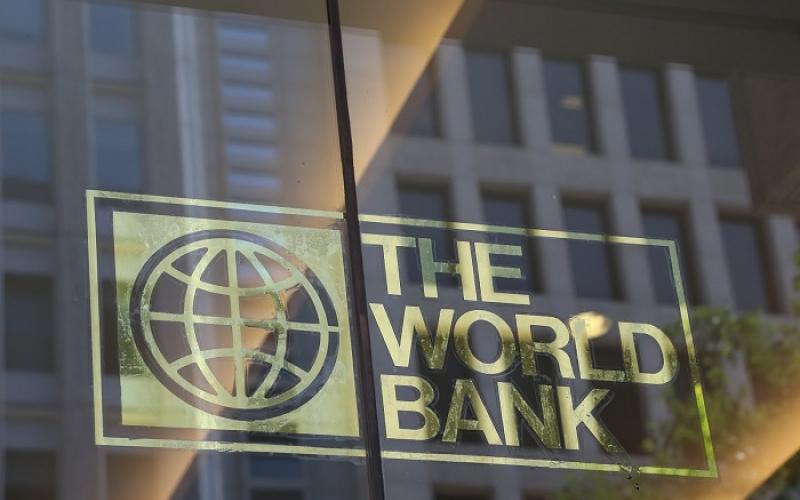
Institutionalized Racism in the World Bank: A Crime Against Humanity

A Nobel prize winning economist, former chief economist and senior vice president of the World Bank, and chairman of the President’s council of economic advisers Joseph Stiglitz says that the International Monetary Fund and World Bank loan money to third world countries as a way to force them to open up their markets and resources for looting by the West. Do central banks do something similar? Economics professor Richard Werner – who created the concept of quantitative easing – has documented that central banks intentionally impoverish their host countries to justify economic and legal changes which allow looting by foreign interests.

Read More


Friday, April 29, 2016

Top 10 Trends in Africa in 2016 and Beyond

Many resource-rich African countries make poor use of their wealth. Take Equatorial Guinea, a small oil-producing country on the continent's west coast. In 2010, an estimated 75% of the population lived on less than $700 a year, but the average per capita income was almost $35,000, the continent's highest. Instead of creating prosperity, resources too often foster corruption, undermined inclusive economic growth, incited armed conflict and damaged the environment.

Read More

Thursday, April 21, 2016

African Memorial Month

African History is world history, moreover; our history is every day. Henceforth, a monthly presentation will be presented featuring different elements of our heritage. African Memorial Month is featured in May to feature our neglected and forgotten Heroes in the western hemisphere. In the US, we’re familiar with Marcus Garvey, Malcolm X and Dr King and in Africa, Patrice Lumumba, Julius Nyerere, Kwame Nkrumah and Haille Selesse I was household names. However, we must acquaint ourselves with the Latin American heroes such as: the enslaved African-Mexican Gasper Yanga and Abdias do Nascimento, a Brazilian writer, painter, politician and scholar who was an outspoken civil rights leader on behalf of African Brazilians, has died in Rio de Janeiro.

Read More

Friday, April 15, 2016

Why South Africa should undo Mandela’s economic deals

Is South Africa finally maturing to the point that the economic - not just political - compromises of the 1990s democratic transition can be reconsidered? When engaging student activists, for example, University of the Free State rector Jonathan Jansen frets that “If [former President Nelson] Mandela gets any mention at all, it is as a sell-out, the man who led South Africa into a soft transition that left white privilege undisturbed and black poverty undiminished”.

Read More

Friday, April 8, 2016

Beating the Resource Curse in Africa: A Global Effort

Many resource-rich African countries make poor use of their wealth. Take Equatorial Guinea, a small oil-producing country on the continent's west coast. In 2010, an estimated 75% of the population lived on less than $700 a year, but the average per capita income was almost $35,000, the continent's highest. Instead of creating prosperity, resources have too often fostered corruption, undermined inclusive economic growth, incited armed conflict and damaged the environment.

Read More